Payment methods
Is a cashier's check safe for buying a used car?
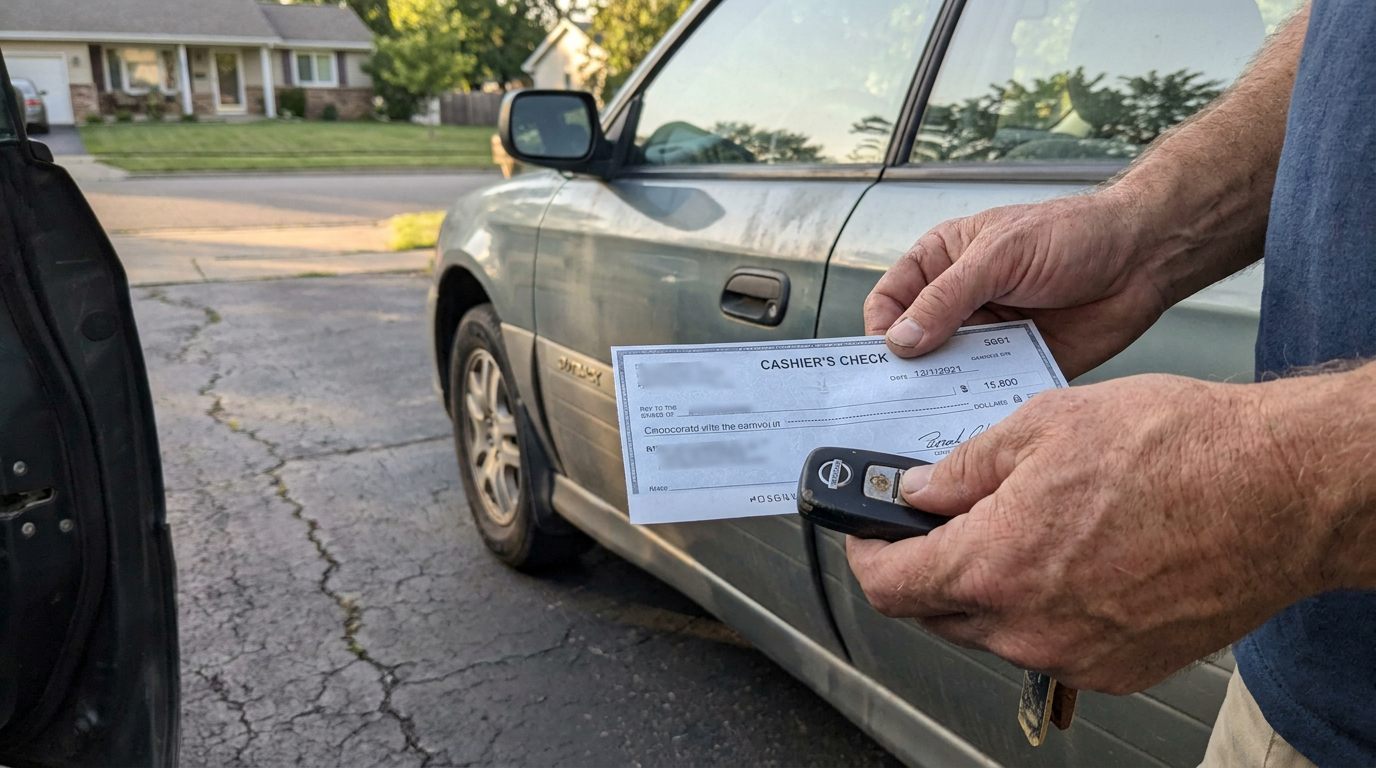
Short answer: yes, but only the way it's meant to be used. A cashier's check you order yourself, from your own bank, and hand to the seller in person after seeing the car is one of the safer ways to pay for a private car sale, cash-equivalent and bank-guaranteed. The same instrument becomes a scam vector the instant someone else is directing how or where it moves.
Paste the listing before you talk payment method at all. CarBluff flags remote-payment and escrow language automatically.
Scan a listing freeWhen a cashier's check is genuinely safe
You control it: you order it from your own bank or credit union, made out to the seller by name, and you hand it over in person only after you've inspected the car and confirmed the VIN and title. Meeting at the bank that issued it is even better, since the seller can walk in and verify it's real on the spot, which protects both sides equally.
Where it turns into a scam
CarBluff's engine treats a named payment method like a cashier's check, wire transfer, or Zelle as context-dependent, not automatically bad: it checks whether the ad also describes a local, in-person handover. If it does, that's a normal payment note. If the ad names electronic or bank-instrument payment with nothing about meeting, a test drive, or a local pickup, that's flagged as an electronic payment with no in-person plan, worth confirming before any money moves. The scam pattern isn't the check itself, it's a seller who wants it sent somewhere you can't verify, before you've seen the car.
The overpayment version (if you're selling, not buying)
The classic cashier's-check scam runs the other direction too: a "buyer" sends a check for more than the agreed price and asks you to wire back the difference before the bank has fully cleared it. The check later bounces as counterfeit, and the wired difference is gone. A cashier's check can look completely legitimate and still be fake. Never release a car, a title, or a refund until your bank confirms the check has fully cleared, not just shows a provisional credit, which can take several business days.
What actually protects you either way
- See the car and confirm the VIN and title before any payment changes hands
- Never accept a check for more than the agreed price
- Meet at the issuing bank when you can; both sides can verify the check together
- Treat "ship it to me" or "I'll pay once it's on the truck" as a hard stop, regardless of payment type
How to check the listing in 60 seconds
- Paste the listing link or text into the free CarBluff scanner before payment method ever comes up.
- Look for a remote-payment or escrow flag: either means the ad doesn't describe a real, local, in-person deal.
- Agree on cash-equivalent payment (cash or a cashier's check you personally obtained) handed over after inspection.
- Meet in daylight, ideally at a bank or a police-station safe-exchange zone, and verify the VIN and title on the spot.
The first scan is free. CarBluff flags remote-payment language the same way it flags gift cards and wire transfers.
Check a listing nowSources and further reading
- FTC: What to know if you're buying or selling a car online
- BBB Scam Tracker
- CarBluff's full methodology